It was an honor being selected to bring Rueda to the Albert Torres Northwest Salsa Congress in 2007! The world-wide Salsa Congresses were incredible, with three full days of workshops, performances, and dancing into the early morning hours. There were discounts to the beautiful hotels where the event took place, and when you arrived, you were greeted with Salsa music in the lobby and elevators. Everywhere you looked, there were dancers – dancing in the lobby, even! The first workshops started at 9am, and the last event ended with a late night breakfast at 4am.
I had never been to anything like this before. Every single person I met was so kind, a refreshing break from some of the attitudes I had experienced in the past. One night you are watching incredible dancers on stage, and the next day, they are leading workshops with such kindness, encouragement, and attention to detail – everyone devoted to the craft and the joy and unity that Salsa can bring.
After a workshop I attended, Albert Torres was at the front of the stage, organizing papers. I approached, expressing my gratitude for the Congress. He was very kind, asking if I were teaching at the Congress, wondering how my experience was, and interested in my path to Salsa.
I left the conversation amazed that someone who is so busy, someone who was an integral part of getting all of these international Congresses going, that he had a moment to talk – or that he even had interest in little ol’ me! It showed how much he cared about each individual person, genuinely curious how they are contributing to Salsa, and with his kindness and interest, creating much inspiration and encouragement to keep going, to follow my dreams.
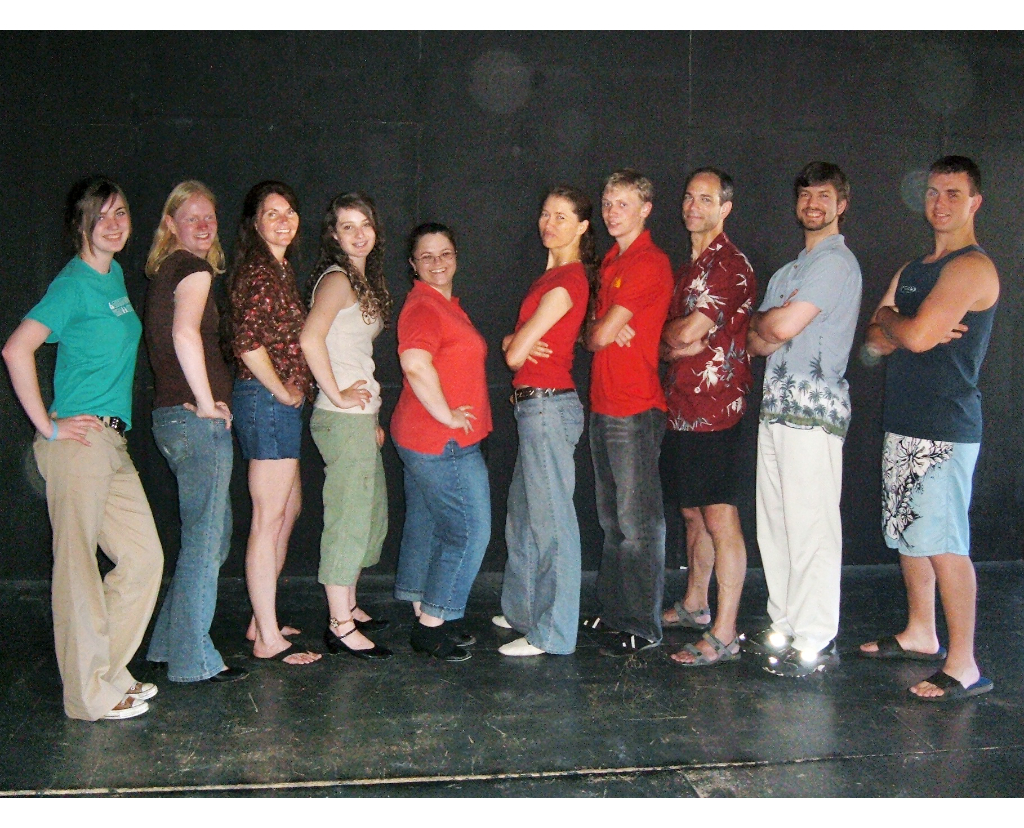
Here is our group that was selected to perform Rueda, which included my Rueda teachers in 2007
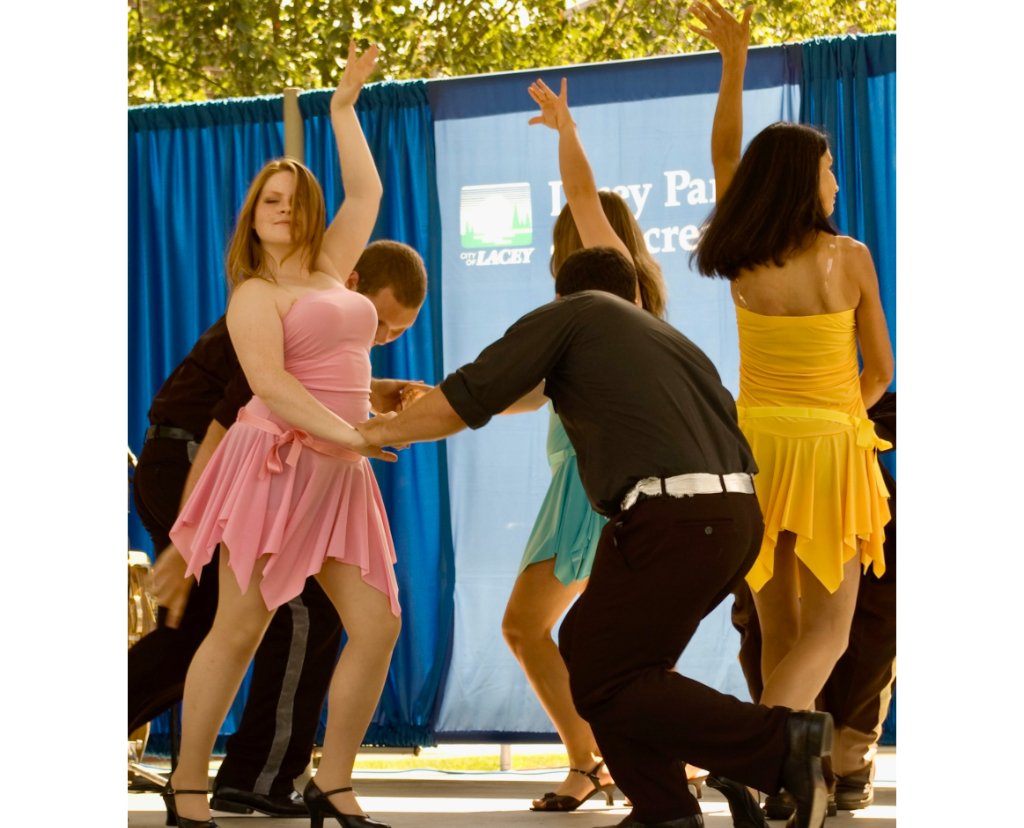
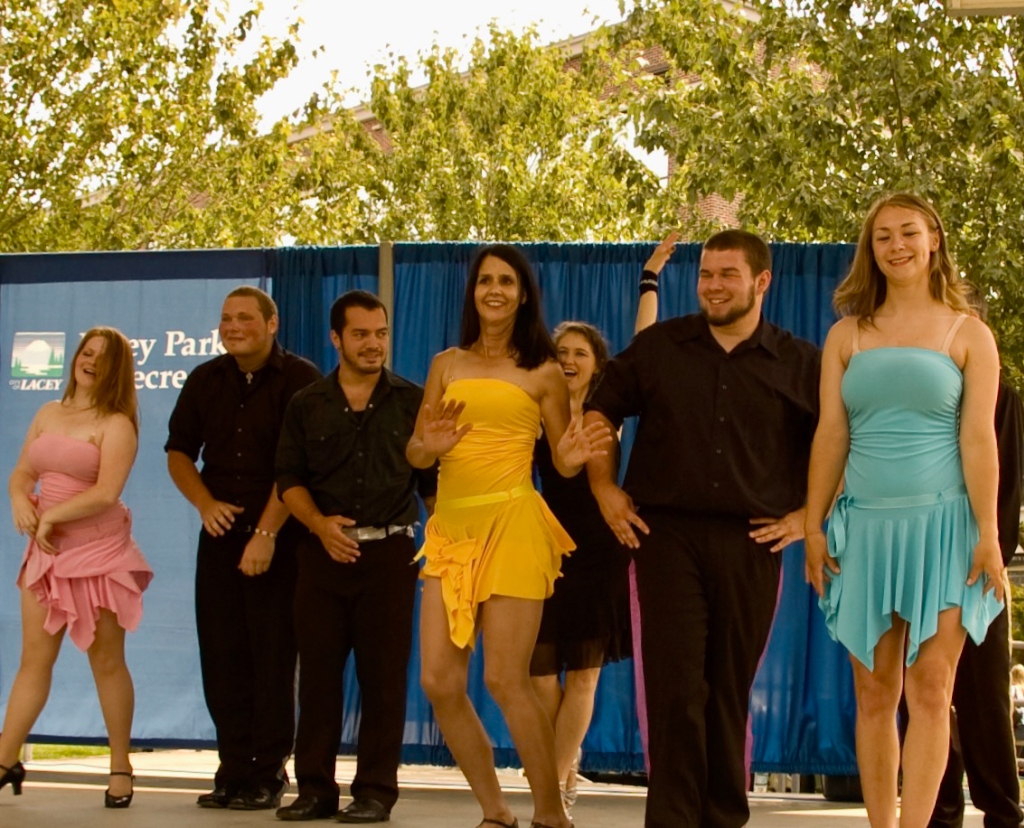
And, a year later, here is our group after I trained with a World Salsa Champion for a month in Costa Rica, in 2008
Now, it is nearly 20 years later, and with a need for inspiration by recalling that magical day meeting Albert Torres so long ago – a day that launched me in directions I never imagined I could go – I started searching the internet, and found some articles written after his death in 2017, giving thanks to all his amazing work.
These articles are interesting, though I was looking for something more – something that would give me the same kind of spark I got when going to the Congresses, seeing the dancers, being in the room with the live bands – and finally! I found it!
It’s an interview from 2006, where Albert talks about how he got started – dancing at age 5 with his mom, who danced at the famed New York Palladium – he went over his current projects, and plans for the future, and then! He takes an incredible deep-dive into listing dancers and musicians – from the past and present – all who are key contributors to the Salsa we know today.
This is a gem – an incredible collection for the history of Salsa! By saying their names, we keep their art alive. By watching the musical greats play, maybe we can come a little closer to understanding the music, allowing for inspiration on the social dance floor. Watching the dancers on the films, perhaps we can be inspired to try a new fun move, and maybe even brave a performance ourselves! Most of all – we might get an idea to add to our own style – realizing that everyone dances in their own way, and that, we too can enjoy the luxury of creativity.
This interview is truly an inspiration! And one that I am going to share with you here. I have also included links to YouTube – finding the old films, and some more recent ones, too!
When discovering something so wonderful on the internet, usually, I’d write about it, then provide a link to the original article. Though, because this interview is on a website that is labeled “not secure”, has links that go to disabled pages, and to avoid the risk of loosing this valuable gem of an interview, I have copied it here.
Here are YouTube playlists with the entire collection, so one can click on “play” to automatically go through all the links – keep in mind the volume for each film can be drastically different…
.
Below, the text is a direct copy from this webpage, note it is marked “not secure” … http://www.americasalsa.com/salsa_interviews/simply_albert_torres.html
.
Interview with Albert Torres (excerpts from Spanish Version)
By: Sergio Lleonart
October 2006
Please tell us, just to get to know you better, where you were born and where you worked before becoming a producer.
I was born in Brooklyn, New York. I’ve always danced, first I used to dance disco and do hustle dances. Before becoming a producer, I managed 50 beds in a hospital, helping people with drug, alcohol, and mental problems. I’ve been sober since December 14th, 1985 (almost 21 years). That’s why I have a life today and help others fulfill their dreams.
How and when did you start with Salsa? How and when dancing Salsa?
I started to listen to Salsa music, that changed my life, when I was 5 years old, and later, more intensely when I was 12 – the time of the Fania All Stars.
I started to dance salsa when I was 12. But, my first classes were with my mother, who would go out to dance in the infamous Palladium of New York. She would teach me when I was only 5 years old. Later, in 1991, I was selected as one of the dancers for the movie Mambo Kings. There, not only did I have the pleasure of working with Antonio Banderas and Armand Assante, but also with Tito Puente, Celia Cruz, and José Alberto El Canario.
What was your first production and how did you get to become the most important producer of the world Salsa market?
First, I started dancing as one of the leading dancers of Mambo Kings. Later, I was selected from among 400 partners to dance in the 1993 Academy Awards, dancing to the song “My Beautiful Maria” from the movie Mambo Kings. The singer was Placido Domingo. Only four dancers were selected and I was one of them. Later, I was the choreographer of the Salsa scenes in the move Dance with Me, and I danced in the movie. I worked with Vanesa Williams and Chayanne for five months. I worked with Jack Lemmon and Walter Mattaeu in the movie Out to Sea and also danced in the film. Later, I danced with Jennifer Lopez in the Keenan Wayan Show.
And, after all this, since 1991, I started to promote Salsa clubs in Los Angeles. I lost lots of money. Nobody was intersted in Salsa. I started to manage Johnny Planco y su Conjunto Amistad, currently the most internationally renowned Salsa band from the west coast of USA.
In 1996, I worked with Leo Tizol from Puerto Rico and Bill Martinez from San Francisco, and in January of 1997, for the first time in history, we brought Los Van Van from Cuba to the United States.
1997 was the beginning of Mr. Eli Irizarry’s dream (from Puerto Rico) – the concept of Salsa congresses in San Juan. I didn’t go the first year, but I heard many nice things, although it was a financial failure. I went to the event in 1998, and was the master of ceremonies, and later the same concept started in Los Angeles, beginning in 1999. During the following eight years, the Los Angeles Congress stood out as the largest in the world, with more than 6,000 people from 42 countries.
Now, I’m co-producer of 32 World Congresses and co-producer of the World Salsa Championship that is aired by ESPN from Las Vegas, seen by more than 20 million homes worldwide.
I’m also promoter of four clubs each week in Los Angeles. I manage dancers, and still manage Johnny Polanco. For 2007, I’ve reserved 48 weeks of the year to travel and promote Congresses and qualifiers for the World Salsa Championship.
What objective do you wish to accomplish with your Salsa Congresses?
My most important desire in being a promoter of the Congresses is that these means be used for the dancers to fulfill their dream of performing on stage, and also to find a way for dancers to receive the respect they deserve. This is very important.
From the very first year, the West Coast Salsa Congress positioned itself as the most important in the whole world. How did you achieve this so quickly?
Lots of work. Searching for the best dancers for performances and for workshops. Also, that the best live Salsa bands could be seen at this Salsa Congress.
We’re always looking for new talent, since we have the possibility of presenting afternoon shows where world reowned talents have been found. Many dreams have been fulfilled and some spectacular careers have started. The way we treat the dancers, and the importance of dance floors for them to come to dance and enjoy.
What do you take into account when a Congress of such magnitude is organized? What is prioritized?
Security and that they feel comfortable. Respect, good quality shows, and live music. The right dance floor. Seats, space, relevant workshops, including some on the history of music, etc, etc. We’re in the world of entertaining the audience and respecting the dance performers.
Who and how it is decided who participates?
Between the 1st and 15th of December each year, DVDs are received from all over the world as auditions. Last year, I received 740 DVDs to review. I watch them all. Around January 22nd or 23rd, we publish the selected groups and partners on my website. I always have a waiting list in case someone can’t come to the Congress. I’m the one who makes the decision with the help of my assistant, Jose Mendoza.
Which other Congresses do you organize around the world?
In some of the following, I’m co-producer, consultant, or it’s one of the qualifiers for the World Salsa Championship in Las Vegas, December 13 – 16th, 2006:
- January 2007
- Salt Lake City, Utah / New Zealand / Sydney, Australia
- February 2007
- Hawaii / Monaco / Rome, Italy / Zurich, Switzerland
- March 2007
- New York / New Jersey / Gothenburg, Sweden
- April 2007
- New Zealand / Montreal, Canada / Israel
- May 2007
- Sofia, Bulgaria / Los Angeles
- June 2007
- Hawaii / Philadelphia / Chicago / Seoul, Korea
- July 2007
- Barcelona, Spain / Caracas, Venezuela / Hamburg, Germany / San Juan, PR
- August 2007
- Seattle Northwest Congress / Bejing, China / Castellon, Spain, San Diego / New York
- September 2007
- Romania / Cali, Colombia / United Kingdom / Houston, Texas
- October 2007
- Istanbul, Turkey / Vancouver, Canada / San Francisco / Acapulco, Mexico
- December 2007
- Las Vegas, Nevada
And still to come, India, Cuba, and many more.
What’s your opinion on the current level of dance, are there significant differences, or has the playing field been leveled – do some stand out more than others?
The world level is very good. Each year, I notice that salseros from all over the world are studying more, buying DVDs, and practicing more the different styles. Obviously, some countries are still among the beginners/intermediates and are only dancing in one. But there are others, such as many parts of Europe (Italy), and in Japan or Korea that are dancing more intermediate/advanced in one and in two. They’re also including the Cuban style. It’s a very interesting mix. In Milan, Italy, there’s Tropical Gem, and The Swing Guys, two of the most sought-after and salient groups in the Congresses. Now, there are the other dancers that I’ll mention whom I consider incredible.
In Japan, there’s Ryoko and Rue. In Spain, I saw really good Salsa dancers. From Argentina, we had dancer this year that opened my eyes to talent there. In Venezuela, you have the Imagen Latina dancers. Now, I went to Cali, Colombia, ad appreciated the unique style and dedication to Salsa of dancers such those of Mulato and his Swing Group, and the world champions, Ricardo Murillo and Viviana Vargas of Stilo y Sabor; they won the cabaret style in the first World Salsa Championship in Las Vegas that was seen world-wide in ESPN in December of 2005. I saw Salsa dancers in Cali from 4 to 80 years old (the old school). The kids dancing for Nueva Dimension School are great. This is the future of our dance.
Which dancers and companies have impressed you the most?
Tito & Tamara from Puerto Rico
Eddie & Maria Torres
Victor & Burju of Hacha y Machete from Boston
Johnny Vazquez from Mexico
Papa Rumba & Henry Herrera from Cuba
Oliver & Luda from Australia
Junior & Emily from San Francisco
Jhesus Aponte & Marielys Molina & Candy Mena
Amanda Estilo from Santo Domingo
Sekou McMiller from Chicago
Edwin Rivera from the Bronx and Los Angeles
There’s a lot of new blood that I’m evaluating, and during the next few years, there will be many changes. One of them is Al Liquid Silver Espinoza and his wife, Karla. In Argentina, you’ve got to give credit to some dancers that are working hard and opened our eyes to what’s happening with Salsa in Argentina, the same goes for Americasalsa that gives us information on what’s going on there. These dancers are
Marcelo Reynoso with Noel Figueroa (Mambo Shake)
Celeste Delise with Marino Soto
Adrian Visciglia with Belén Godoy
Among the groups I’d like to highlight are:
Tropical Gem’s groups in Italy
Swing Guys of Italy
Santo Rico
Karisma & Yamulee of New York and New Jersey
Mulato’s and Ricard & Vivian’s groups in Cali
Salsa Dance Squad of Holland, directed by Eric
Angel Martinez Dancers
Pap Tambor & Coabey Dancers of Puerto Rico
Pretty Boys & Girls
Salsamania from San Francisco
People know about Albert Torres from his Congresses, but you also organize shows and band tours. Tell us a bit about this.
Where should I start? At this time, in addition to the World Congresses, and the Salsa Championship that is seen worldwide on ESPN, I represent various bands and manage Johnny Polanco y Su Conjunto Amistad and Chino Espinoza & Los Dueños del Son.
I also manage dancers such as Junior & Emily of San Francisco. I have four dance clubs weekly (Tuesday, Friday, Saturday, Sunday) in Los Angeles which my employees handle, and I have two right hands: Jose Mendoza and Fernando Barrera, who make sure that all is well. I’m in touch with them daily, and make the decisions on the bands and instructors of these places.
You can see that I’m doing a lot of things, although I’m traveling 48 weeks of the year outside of Los Angeles. I’m part of the Salsa Seven; we’re the producers of the Las Vegas Salsa Championship.
I’m also president of a non-profit organization dedicated to music and dance education. We sponsor kids that dance in the Congresses or take classes for musicians. The company is called Baile de los Niños; it’s my company. We’ve helped kids around the world. I’ve also started the Music Seminary that takes place the week before the Los Angeles Congress.
Salsa band tours, like this year,
Maraca from Cuba
Oscar D’Leon
Swing Sextet
Tito Puente Orchestra
Orquesta Broadway
Orquesta de Machito
Tipica 73
Jose Alberto El Canario
Jimmy Bosch
Azuquita
Adalberto Santiago
Tito Allen
Cano Estremera
Sonora Carruseles
Spanish Harlem
Tabaco & Ron and many more
As I understand, you’ve organized tours for Cuban bands such as Los Van Van, do you still produce these shows? How does the American public react to Cuban bands?
With the support of Bill Martinez from San Francisco and Leo Tizol, we were the first in America to bring Los Van Van (number one group from Cuba) in January of 1997 for concerts in New York, Puerto Rico, San Francisco, Los Angeles, and San Diego. The first concert for this band in the United States after 25 years of existence. Later, I had Los Van Van many times until Bush closed the doors on bringing Cuban music. I hope the doors open up again in 2009 with the new president. I have lots of surprises when that happens.
Los Van Van
Other Cuban bands that we toured:
Adalberto Alvarez
Orquesta Aragon
Anacaona
David Calzado & La Charanga Habanera
Maraca
Issac Delgado
Bamboleo
And others I don’t remember now – you must understand that I just arrived tonight from Sweden after being 20 hours on an airplane. It’s 12:30 in the morning, and tomorrow, I am leaving for New York to be part of the 50th Anniversary of Jonny Pacheco in the music industry. There’ll be Fania Stars Oscar D’Leon, Jimmy Bosch, and may more in Madison Square Garden.
I also have, in addition to the clubs this week, Junior & Emily in Italy, and Jonny Polanco with 13 musicians in Singapore Salsa Congress, traveling 24 hours to play at that event. Now that’s dedication.
We’re organizing a new Congress in San Diego for 2007 and resolving some minor red-tape issues for some dancers. We’re busy. That is what I’ll do until my last breath. I’m living my dream.
Which Salsa artists do you like the most, who are your favorites?
Oscar D’Leon
Jose Alberto El Canario
Johnny Polanco
Jimmy Bosch
Victor Manuelle
Gilberto Santa Rosa
Ray de la Paz
Domino Quiñones
Mercado Negro (Europe)
Spanish Harlem
Maraca
Tabaco & Ron
Chino Espinoza & Los Dueños del Son
Diego Gale and all his groups
I also want to mention
Tito Puente
Celia Cruz
Beny More
Richie Ray & Bobby Cruz
Machito
Mario Bauza
Tito Rodriguez
all the Fania All Stars
Ray Barretto
Roberto Roena
Hector Lavoe
and the rey del Mambo Israel Lopez Cachao and many more.
Thanks to Dimelo Records and Nassim for their work in keeping Salsa music alive. Long live Salsa Dura!
Does Albert Torres listen to Salsa at home? What other musicians do you like?
Yes. I hear Salsa music every day because I receive about 10 CDs to review and give my opinion on them. I like to listen to R&B and also the Black Eyed Peas, and I like from my childhood, Marvin Gaye, and the Jackson Five. Are you surprised? Also Sammy Davis Jr. and Frank Sinatra.
Thank you, Albert, for the interview.
Remember the African saying, “If you can walk, you can dance. Dancing is just walking to the rhythm of music”.
Israel Lopez Cachao, “The only thing I ask is that the youth continue this tradition”.
Remember that it’s not life or death; don’t take it so seriously. Enjoy dancing!
Albert Torres: “Creating Unity Through Salsa”
Albert Torres: “If we’d all be dancing, there’d be no wars”

